
| New Patient 1st appointment | Additional £10 |
| Podiatry Treatment | £63 |
| Premium Time Appointments 8am, after 4pm | Plus £10 per app. |
| Verruca Treatment | £73 |
| Biomechanical Assessment | £126 |
| Reflexology | £63 |
| Pedisafe Nail Reconstruction | £109.50 From |
| Fungal Nail Test | £55 |
| Specialist Package Treatments | |
| Falknor's Needling | £342 |
| Nail Fenestration | £365 |
| Bespoke Orthotics | £326 |
| Shockwave Therapy | £322 for 3 treatments & 6wks review |
| Foot Mobilisation Therapy | £404 includes course of 6 app |
| Nail Surgery | £488 includes 4 review app |
| Dermal Foot Filler | £362 includes 1 review app |
| Referral Letter | £15 |
| CANCELLED OR MISSED APPOINTMENTS WITHOUT 24 HRS NOTICE | £63 |
PODIATRY TREATMENTS
As Podiatrists we treat all foot, skin and nail conditions. From foot pain, itchy, rough, thick skin. Corns, Verruca, Fungal and Ingrowing Toenails. Our scope of practice is vast, treating Tendinopathies with Shockwave Therapy. Relieving painful ingrowing toenails conservatively or with Nail Surgery. Treating unsightly nails with Lacuna Nail Fenestration or Pedisafe nail reconstruction. Whether it is sports related or every day activities we can relieve foot, ankle, knee, hip and lower back pain with custom made Orthotics. Remove those annoying verrucae with chemical treatments or Falknor's Needling. Concerned about your Diabetes we do Vascular, Neurological and Sensory tests, checking pulses, temperature, skin conditions. This can be put into a report and sent to your GP if needed. No matter what your finding hard to tackle leave it to the professionals. We can advise/recommend or prescribe the best form of treatment needed.
PEDISAFE NAIL RECONSTRUCTION
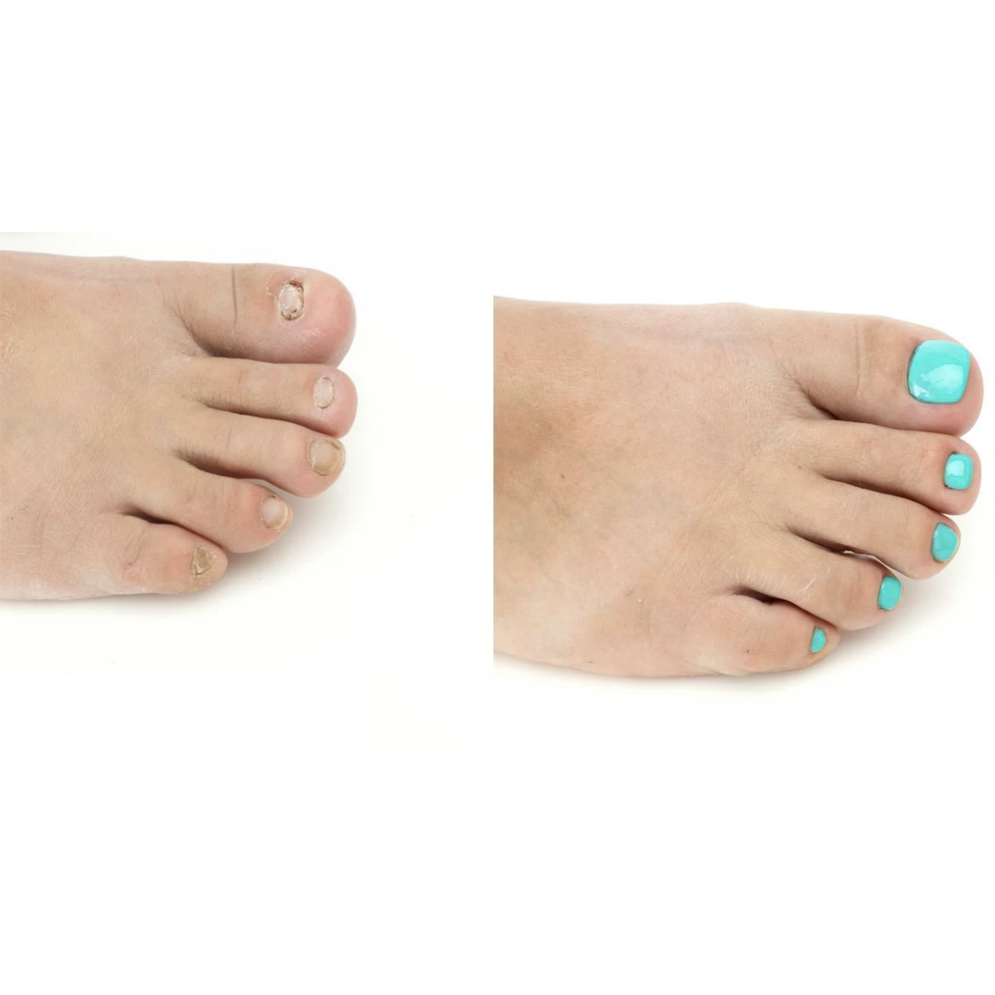
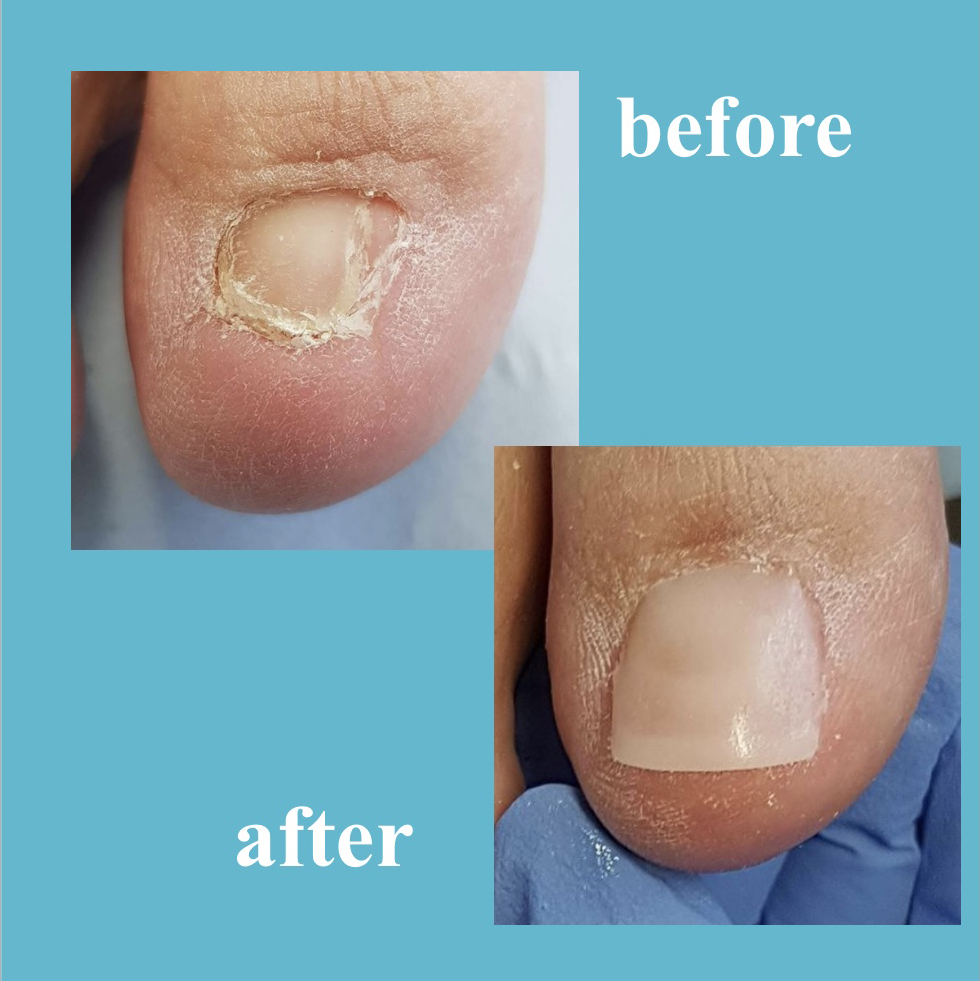
Do you have thickened, damaged, fungal nail and want them to look more presentable then Pedisafe Nail reconstruction is for you.
Pedisafe is an advanced nail reconstruction and modelling system, designed to restore the appearance of damaged like nails. More than just a cosmetic fix, we offer a safe and effective way to rebuild and protect nails giving you confidence to get your toes out.
This technique uses the medical model of application, this means we use medically sterilized or disposable instruments, with our medical background we use our aseptic technique and there is no dipping and re-dipping of brushes, using single use nylon lip brushes and micro brushes.
Enabling us to treat clients that should not be treated by a beauty therapist, without the risk of cross contamination.
Fanair Cosmetics have researched and developed specific UV cured gel polymers for the safe application on fingers and toenails.
Who would benefit from this treatment:
Both Men & Women
Fungal Nails
Psoriatic Nails
Onychauxis (thickened nails)
Split Nails
Subungual corns (corns under nail)
Involuted Nails
No nail being present
We can save you the indignity of having an unsightly toenail. This is a complete bespoke prosthetic reconstruction of a nail.
FUNGAL NAILS
What are fungal nails?
Fungal nail infections are common and can affect both the fingernails and the toenails. The problem usually affects more men than women and becomes more common the older you become.
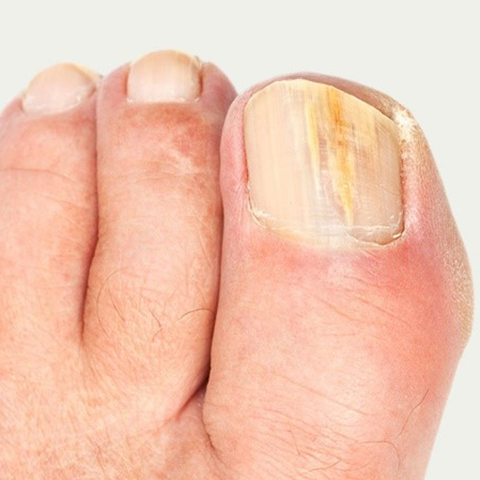
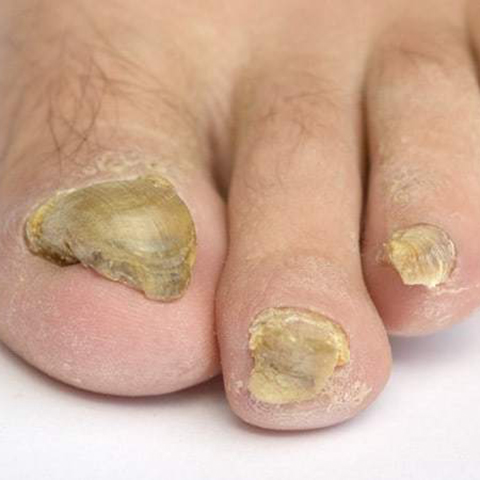
A fungal nail infection causes visual changes to the nail. It causes the nail to change colour, thicken and becomes brittle. As the infection progresses the nails will start to produce a distinct odour.
Around half of all nail problems are due to fungal nail infections.

Fungi called Dermatophytes live harmlessly on the skin but can often multiply and lead to infection in dark, warm and moist environments such as the feet. Certain shoes can cause the feet to become hot and sweaty which can lead the fungi to multiply quickly. Not keeping the feet clean and dry can also speed up the infection risk.
The infection will progress if left untreated. The nail can become discoloured with the nail turning white, yellow, green or even black. The nail can become thickened and the texture can change making it difficult to trim. The shape of the nail can also change which can cause discomfort when placing pressure on the toes that are affected.
Keeping feet clean and dry can help to reduce the risk of developing a fungal nail infection. Wearing shoes made from natural materials and cotton socks will allow the feet to breathe.
Fungal residue can build up in towels and socks, therefore, it is very important that they are washed regularly and not shared with others.
There is a choice of either oral or topical anti-fungal treatments. Oral anti-fungal treatments can be prescribed by your GP if you are suitable. Topical treatments are available over the counter or from your podiatrist. Fungal nail infections can take a long time to resolve (12 months +), but the proper preparation of the nail surface by a podiatrist prior to applying the topical agent can increase the success.
The Lacuna Fenestration Method is an exciting new addition to Alderley Edge Foot Clinic. It has enabled us to treat more stubborn, unsightly fungal nail infections, without the use of any potentially unpleasant side effects from oral medications, which until now have been the only fairly successful way of treating fungal nail. The treatment involves drilling tiny multiple holes across the fungal area. A Lamisil spray penetrates through the holes to the nail bed and kills the fungus. Spray to be applied every day. See our specialist packages for prices. We are able to test the nail for fungal infection and advise of treatments best for you.
INGROWN TOENAIL
An ingrown toenail affects the large toe in most cases but can also affect the other toes. An ingrown toenail occurs when a sliver of nail pierces the flesh at the side of the nail. The condition can be extremely painful and occasionally the toe can become infected. If an infection is present, the toe will become very inflamed and can produce pus and blood.
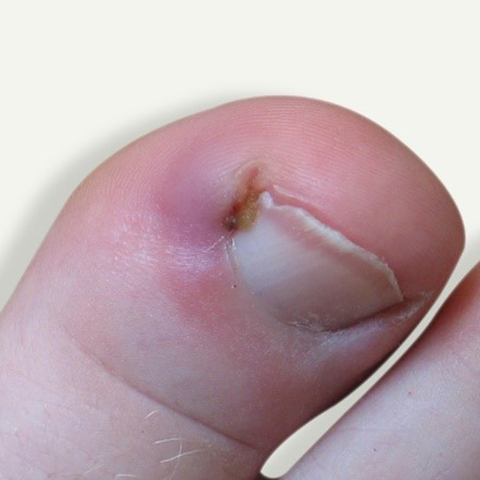
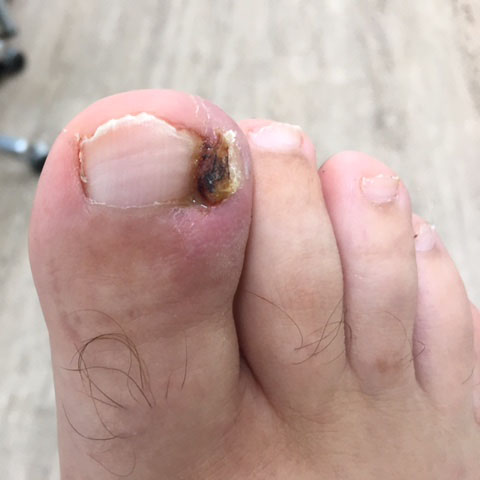

There are many causes of ingrown toenails but did you know that genetics often play a part? Conditions of the foot such as bunions can also be the cause of ingrown toenails.
Toenails come in all shapes and sizes. Often the nail can be wide and appear fan shaped. Rather than the nail growing straight it may grow into the flesh resulting in an ingrown toenail.
Many of us also cut our toenails incorrectly. The nails should be trimmed straight across but we do tend to curve the nails at the edges. We also cut the nails too short. This can encourage the nail to grow into the nail bed.
Our footwear choices can also lead to ingrown toenails. Tight shoes and socks can push the nail into the flesh and can cause the nail to become ingrown.
We do find that the most common cause of an ingrown toenail is incorrectly trimming toenails. If you do have problems trimming your toenails a podiatrist can help.
Ingrown toenails can become very painful if left untreated. Infection can take hold quickly if the toe is not treated. In severe cases, the infection can spread to the rest of the toe and even the foot.
There are a number of ways that can help relieve the pain of ingrown toenails, including some which you can do yourself at home. The home care techniques are always the best place to start, however, it is always recommended to seek advice on the possible treatment options by a podiatrist.
Ingrown toenail management can be carried out by your podiatrist. If your ingrown toenail isn’t too severe, it can usually be trimmed by your podiatrist. He or she will lift the edge of your nail and cut away the ingrown section. A local anaesthetic can be administered if your toe is too painful to touch.
If you are beyond self-treatment because an infection has started to set in then you need to book an appointment to see a podiatrist as soon as possible. Your podiatrist will be able to remove the sliver of nail which has become ingrown and cut the nail to try to prevent it from becoming ingrown again.
If the toenail is causing extreme pain and the area is infected and swollen, the podiatrist may have to perform surgery on the toe to remedy the situation. This could mean having some or all of the toenail or surrounding skin cut and removed. The procedure is carried out under a local anaesthetic and is a permanent solution.
VERRUCAE
A Verrucae is usually found on the bottom of the foot and is a small skin lesion usually around 1cm in diameter. Usually associated with children, verrucae are also a common complaint amongst adults.

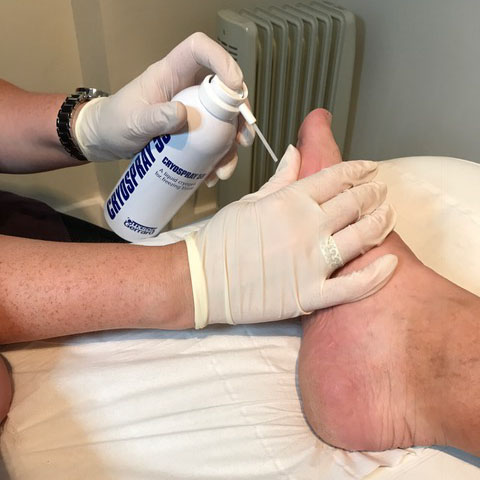
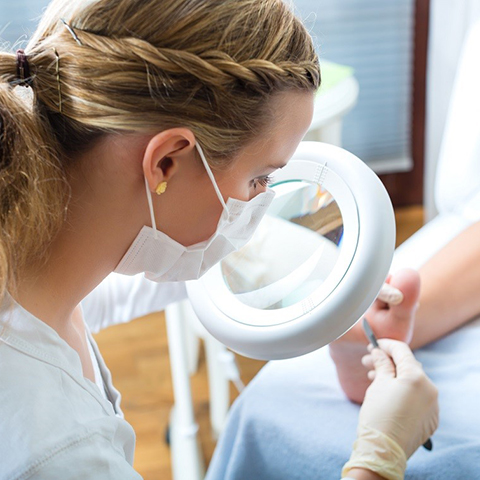
All verrucae are caused by the human papilloma virus which is common in all environments but does not readily attack the skin. Due to this though verrucae are commonly contracted in communal places such as swimming pools, showers and changing areas, this is why children are more at risk of contracting verrucae’s in school changing rooms and swimming pools.
If there is excessive moisture or excessive dryness of the skin this can lead to small cracks in the skin which allows the virus to enter.
Most of the time verrucae will heal on their own if left alone however they can easily spread so if the verruca is touched or scratched a sufferer must wash their hands straight away or it can spread to other parts of the body.
To avoid verrucae, try to avoid touching other people's verrucae and that hands are washed if a verruca is touched. It is also best to avoid sharing towels, flannels, shoes and socks with other people and to make sure that feet and hands are kept clean and dry.
Due to how the virus spreads it is best to avoid going barefoot in public places and communal areas.
Also, if contracted avoid scratching or picking at the verruca this may spread the infection to other parts of the body.
Verrucae can be removed with over-the-counter treatments, but these don't always work. The treatments include things like creams, gels, skin paints and medicated plasters containing salicylic acid, the salicylic acid is used to burn the top layer of the affected skin. You can also find cold sprays that contain dimethyl ether propane, these sprays are used to freeze the wart.
Your Podiatrist can offer a procedure known as Falknor’s Needling which is carried out under a local anaesthetic, promoting an immune response fighting against the virus.
BIOMECHANICAL ASSESSMENT
A biomechanical assessment is an examination of your feet, legs, hips and general structures looking at alignment, strengths and weaknesses.
This can be very beneficial if you are experiencing pain in your feet or lower limbs, but no cause has been established. It is a good starting point for understanding the cause of the problem, from here treatment or further investigation can be decided.
If your podiatrist believes that your mechanics could be contributing to your injury or pain a regime of exercises, strapping or bespoke insoles/orthotics can be prescribed. The assessment takes an hour to complete all the tests necessary, discuss the results and advise on recommended treatment(s).
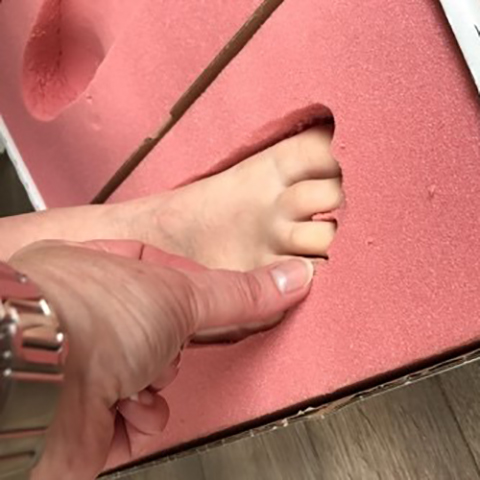
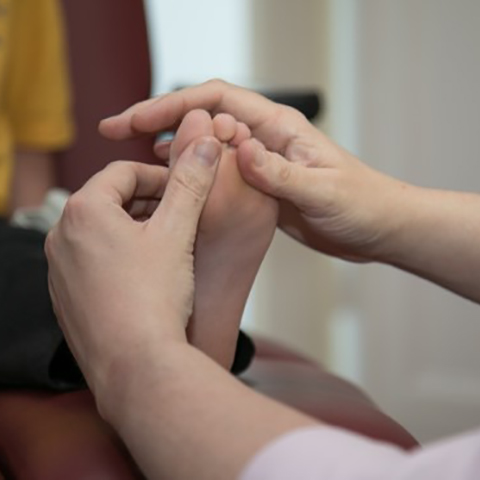
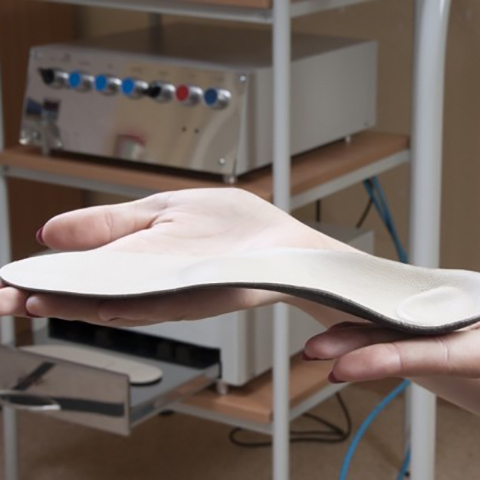
- If any of the joints or structures are not functioning correctly it can produce strain and compression on the nerves and surrounding tissues
- An enlarged or abnormal structure can cause swollen tendons and arthritic boney spur.
If left untreated the condition can progress and, in some cases, it may result in permanent damage.
There are a variety of treatment options which can help to reduce symptoms.
- Rest and ice reduces inflammation. Staying off the area prevents further injury and encourages healing.
- People often take medications to ease the pain BUT it's best to fine the cause and solver the problem without taking medication.
Custom shoe inserts may be prescribed to help maintain the arch and limit excessive motion that can cause discomfort.
Your podiatrist may also recommend strengthening and stretching exercises once the pain has subsided.
- Plantarfasciitis
- Morton's Neuroma
- Over pronation
- Achilles tendon
- Bunions
- Metatarsalgia
- Hypermobility
- Leg length difference
- Knee pain
- Lower back pain
SHOCKWAVE THERAPY
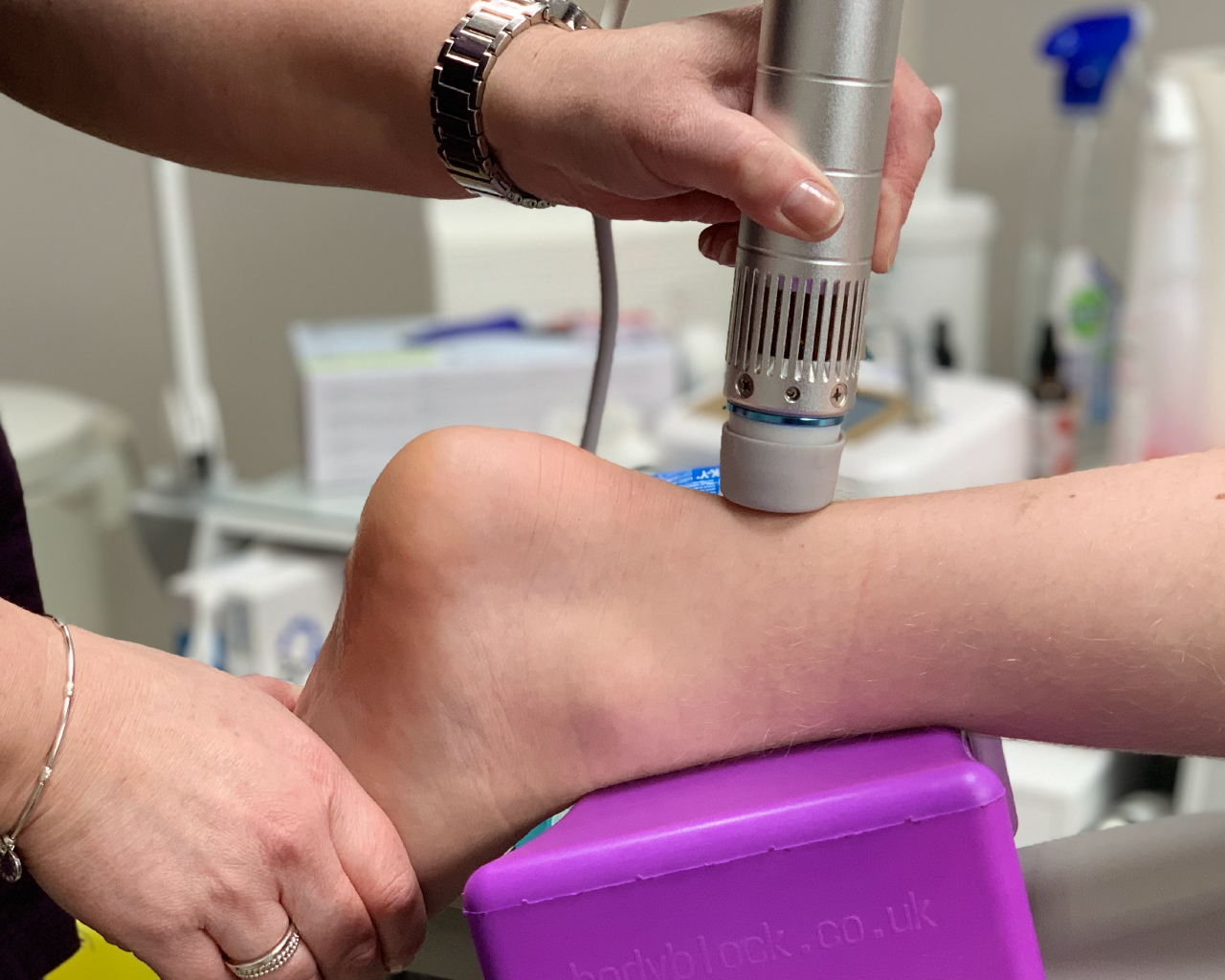
As Podiatrists we specialise in the lower limb, so after in-depth research we bring you another innovative treatment, Extra-Corporeal Shockwave Therapy (ESWT).
When you have pain that stops you doing your everyday activities from walking, running or even gardening. Extracorporeal shockwave therapy is a non-invasive treatment alternative to surgery, steroidal injections and oral medication.
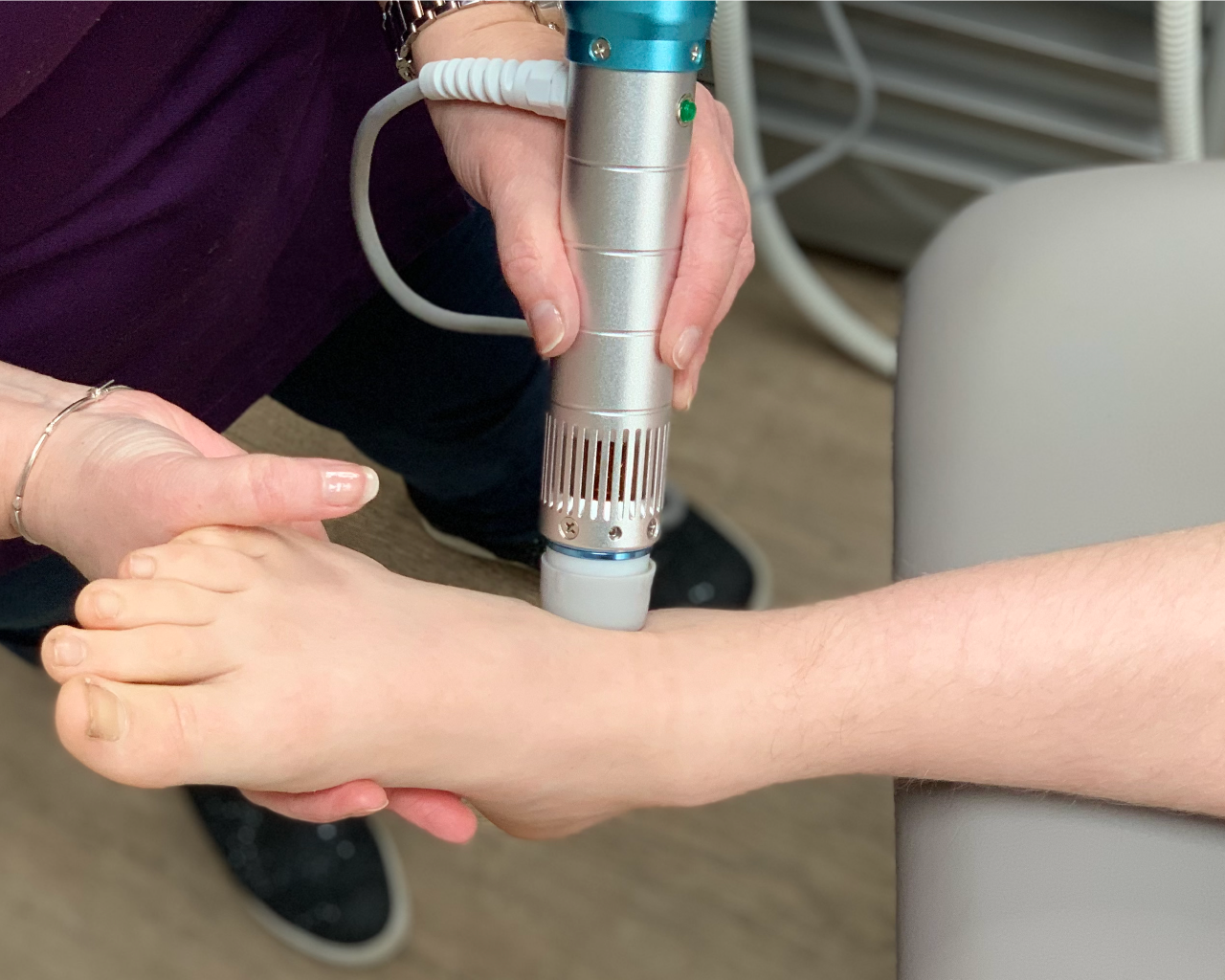
This device is used to pass acoustic shockwaves through the skin to the affected area, it can be utilised in the treatment of tendon pathology. Many years of research have confirmed that pathological alterations of tendons, ligaments, capsules, muscles and bones – in other words the root causes of pain – can be eliminated systematically with this innovative therapy approach. It is a highly effective procedure to treat pain and restore full mobility with minimal risks or side effects. The shockwaves stimulate the body’s own healing mechanisms to facilitate the repair of the damaged tendon.
You will need a consultation to confirm the diagnosis and be assessed for your suitability for the treatment and any appropriate investigations. A course of treatment can be from three to five weeks depending on severity of condition, plus exercises. The effects of the treatment seem to increase over time and the outcome is assessed 6 weeks after the last treatment.

- • Achilles Tendonitis / Achilles Tendinopathy
• Plantar fasciitis/heel spur
• Metatarsalgia
• Plantar foot muscles
• Tibial stress syndrome
• Calf muscle shortening
• Patellar tendinitis
• Thigh adductors
• Shortened thigh muscles
A hypoallergenic skin gel is applied to the treatment area to allow the shock waves to be introduced into the body almost painlessly and without any loss of energy. Shock waves are then applied as the shock wave applicator is moved over the pain region in a circular motion.
Each therapy session takes between 5 and 10 minutes depending on the condition being treated. In general, 3 to 5 treatments are necessary at weekly intervals. After only 1 to 2 sessions, over 80% of patients have reported complete pain relief or significant pain reduction.
There is a significant body of evidence supporting the use of shockwave therapy in many common conditions. For more information about your specific condition please use the links above.
The use of shockwave therapy for tendon issues is well supported by the National Institute for Health and Care Excellence (NICE). NICE provides national guidance and advice to improve health and social care in both NHS and private practice. It provides evidence based recommendations to guide best practice within healthcare. NICE have produced guidelines for the use of shockwave in the treatment of Achilles tendinopathy, plantarfascitis and calcific tendinopathy.
In summary, shockwave therapy significantly reduced the pain that accompanies tendinopathies and improves functionality and quality of life. It has been stated that shockwave therapy has a 70% success rate for tendinopathies (Moya et al, 2018, Dedes et al 2018).
The practitioner providing the treatment will have checked your medical history to ensure that you are at minimal risk of any side effects.
Most Common:
o Redness or bruising in the treated area.
o Skin damage
o An increase in pain in the treated area - this can be controlled with paracetamol, please do not take NSAIDs e.g. ibuprofen, naproxen
Very Rare:
o Tendon tear or rupture
Exclusion Criteria / Contraindications:
o Steroid injection in the past month
o Tendency to haemorrhage
o Patients taking anti-coagulant therapy
o Haemophiliac patients
o Acute inflammation of the treatment area
o Tumour at the treatment site
o Infection of the treatment area
o Pregnancy
o Severe circulatory disorder
o Nerve disorder at treatment site
o Open wound at the treatment site
o Prosthesis
Pre-cautions:
Cardiac problems - Circulatory problems
- If any of the joints or structures are not functioning correctly it can produce strain and compression on the nerves and surrounding tissues
- An enlarged or abnormal structure can cause swollen tendons and arthritic boney spur.
If left untreated the condition can progress and, in some cases, it may result in permanent damage.
There are a variety of treatment options which can help to reduce symptoms.
- Rest and ice reduces inflammation. Staying off the area prevents further injury and encourages healing.
- People often take medications to ease the pain BUT it's best to fine the cause and solver the problem without taking medication.
Custom shoe inserts may be prescribed to help maintain the arch and limit excessive motion that can cause discomfort.
Your podiatrist may also recommend strengthening and stretching exercises once the pain has subsided.
- Plantarfasciitis
- Morton's Neuroma
- Achilles tendon
- Bunions
- Metatarsalgia
- Knee pain
- Lower back pain
FOOT MOBILISATION THERAPY


FMT is a hands-on manual therapy that is a natural solution to fix your foot, ankle and restore your foot function.
Foot mobilisation is a long-established therapy that is widely used by other therapists like physio’s, osteopath’s, etc. to treat musculoskeletal conditions of the foot and leg.
Do you have pain in your feet, heels or ankles that won’t go away, then it’s time to get it sorted. If you have tried other treatments without success, then we can offer you a biomechanical Assessment to assess your suitability for this course of treatment.
There are many benefits associated with FMT as a method of pain relief in podiatry including increased mobility with minimal risk or side effects. This provides an alternative to medication and even surgery.
Susan the lead Podiatrist has specialized in this unique technique comprehensively to treat foot and leg conditions.
After we have assessed you, we will discuss the best treatment plan for you. We may advise orthotics to co-inside as part of the treatment. With foot mobilisation we take the joints through their natural motions to break up any adhesions and restrictions within the area that are preventing the joints from operating effectively.
The treatment will be combined with specific but simple corrective exercises, which allow you to contribute and maintain the improvement of your feet even when you stop seeing us.
The treatment is an intense course over a six-week period, attending the clinic up to twice a week initially depending on condition and pain. You will also have a bespoke exercise routine to improve joint stability.
- Initial Biomechanical Assessment
- Possible corrective orthotics/insoles
- Foot Mobilisation Therapy
- Exercises given on a weekly basis
- Appointment for follow up treatments
- Plantar fasciitis
- Ankle injury / sprains
- Arthritis
- Ball of foot pain
- Bunions
- Achilles tendonitis
- Morton’s Neuroma
- Poor balancing
- Stiffness, general aching of the foot
DERMAL FOOT FILLER CUSHIONING FOR FEET
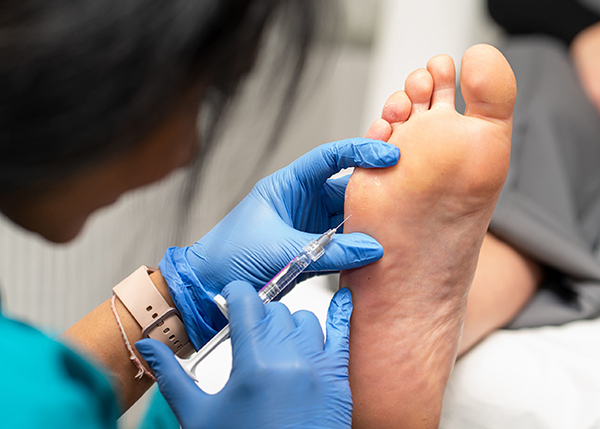
Dermal fillers are an innovative method of introducing extra cushioning under the dermis of the skin in areas of the foot. We will anesthetise the area and inject hyaluronic acid under painful corns and where the tissue has reduced in the foot.
Dermal fillers in the foot are a non-surgical treatment. It can reduce the need for additional padding stuck to the foot which can impede hygiene and look unsightly. The procedure will take about 1 hour.
You will need a consultation to be assessed for your suitability for this treatment.
There are many benefits associated with dermal fillers as a method of pain relief in podiatry including increased mobility with minimal risk or side effects. This provides an alternative to medication and even surgery.
As your fillers will be administered by a Licensed Professional, you can rest assured that you’ll receive the best possible care. We operate at the highest level of regulation and offer follow up aftercare. This treatment can be used on damaged tissues that cause corns, or discomfort of bony prominences. Pain can be eliminated systematically with this innovative therapy approach.
We want to achieve the most optimal and natural results. Results tend to show straight away and can last up to 6-12 months in some cases but can be longer. As with dermal fillers used for facial aesthetics to maintain the desired effect, top up treatments are advised.
You may experience some minor bruising or swelling following your treatment. The swelling typically fades within 48 hours and the bruising will fade within 2 weeks.
Dermal fillers are mainly comprised of naturally occurring sugar in the body, called Hyaluronic acid (HA). HA is commonly present within our body from our eyes and joints. HA has many functions, one of which is to “plump” an area. It is ‘water loving’ which helps the HA to perform its plumping action.
We only use the highest grade of hyaluronic acid filler solutions. These will be administered at a variety of different thicknesses depending on the area being treated to achieve the most optimum results.
- A local anaesthetic is used to numb the area
- Hyaluronic Acid - the dermal filler will be administered into the area.
- You will NOT be able to drive for up to 3-4 hours after the treatment.
- You will have a dressing on for 48 hours.
- A follow up appointment will be made before you leave.
- Corns
- Calluses
- Reduced fatty pad
- Ball of foot pain
- Inter-digital corns